
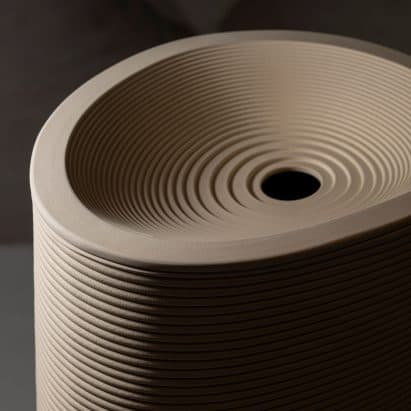
Antao 3D Material: Redefining the Bathroom Surface
In the world of bathroom design, surfaces are rarely treated as opportunities for artistic expression. They are functional, durable, and — more often than not — flat. That is precisely what makes the Antao 3D material, a collaboration between German design studio KaschKasch and European ceramic giant Villeroy & Boch, such a compelling addition to the contemporary design landscape. By introducing sculptural texture and visual depth into the bathroom environment, this innovation challenges the conventions of what a bathroom surface can be, and what it can say.
The Collaboration Behind the Concept
KaschKasch is a Cologne-based design studio with a reputation for work that is at once restrained and quietly radical. Founded by designers Marc Kaschke and Carolin Sangha, the studio has consistently explored the intersection of industrial production and thoughtful materiality. Their previous furniture and object designs have earned them recognition across Europe for a design language that prizes subtlety over spectacle.
Villeroy & Boch, for their part, brings more than 270 years of ceramic expertise to the table. The Luxembourg-based brand has long been a benchmark for quality in bathroom and dining products, and their willingness to engage with independent design voices has produced some of the sector's most memorable collections. The Antao range itself — named after a Cape Verdean island and originally launched to celebrate organic, flowing forms — has become one of Villeroy & Boch's signature contemporary bathroom series.
The development of the Antao 3D material represents a natural evolution of that original collection, pushing beyond the silhouette of the basin and into the very substance of the surfaces surrounding it.
What Is the Antao 3D Material?
The Antao 3D material is a textured surface treatment developed specifically for bathroom environments, designed to bring a tactile, three-dimensional quality to wall and installation surfaces. Rather than relying on colour or pattern to generate visual interest, the material works through relief — through the way light falls across its sculpted geometry and creates shifting shadows throughout the day.
The aesthetic vocabulary is clearly informed by the organic origins of the Antao collection. Soft, curved geometries repeat across the surface in a rhythm that feels natural rather than mechanical, evoking the quiet repetition found in natural forms — rippling water, coastal rock formations, the layered striations of eroded stone. The result is a surface that reads differently depending on the light source, the angle of view, and the time of day, giving the bathroom a sense of life and movement that flat finishes simply cannot achieve.
From a material science perspective, the surface retains the hardwearing, hygienic properties expected of bathroom-grade ceramics. It is easy to clean, resistant to moisture, and built to last — qualities that are non-negotiable in a wet environment. The innovation lies not in replacing what works, but in adding a new dimension — quite literally — to what ceramic surfaces can offer.
Design Philosophy: Texture as Architecture
One of the most interesting aspects of the Antao 3D material is what it reveals about KaschKasch's broader design thinking. The studio has spoken about their interest in giving everyday objects and environments a quality of presence — a sense that they have been considered not just for their function, but for the experience they create. Texture, in this context, is not decorative in the conventional sense. It is architectural.
When you apply a three-dimensional surface to a bathroom wall, you are not just changing how it looks — you are changing how the room feels. Sound behaves differently. Light behaves differently. The relationship between the human body and the space becomes more immediate, more sensory. This is a shift in the role of the surface itself: from background to participant.
This philosophy aligns well with a broader movement in interior design that has been gaining momentum over the past several years, one that prioritises haptic richness — the pleasure of texture, weight, and material honesty — over purely visual impact. In a digital age saturated with screens and smooth interfaces, there is a growing appetite for spaces and objects that reward physical presence and tactile engagement.
How Antao 3D Fits Into Contemporary Bathroom Trends
The timing of the Antao 3D material's development speaks to several converging trends in high-end bathroom design:
- The bathroom as sanctuary: Increasingly, homeowners and designers are treating the bathroom not as a purely functional room but as a space for retreat and restoration. Textured surfaces contribute to this atmosphere by softening the clinical associations of a wet room and evoking the sensory warmth of spa environments.
- Material authenticity: There is a growing preference for materials that communicate their own making — that show craft, process, and the hand of the designer. The relief geometry of the Antao 3D surface carries precisely this quality.
- Cohesive design systems: The ability to extend the Antao material language from basin to wall surface means designers can create bathrooms with a genuinely unified visual identity, strengthening the impact of the collection as a whole.
- Sustainability through durability: Ceramic surfaces that are built to last represent a more sustainable choice than materials requiring frequent replacement. Longevity is itself a form of environmental responsibility.
Showroom Presence and Visual Impact
Photographed in a showroom setting, the Antao 3D material demonstrates its full effect when paired with the clean silhouettes of the wider Antao basin and furniture collection. The interplay between the sculptural wall surface and the smooth, flowing forms of the sanitaryware creates a dialogue of contrasts — rough and smooth, light and shadow, movement and stillness — that elevates the entire bathroom environment into something closer to an installation than a functional room.
Designers specifying for high-end residential or hospitality projects will find in the Antao 3D material a rare opportunity: a surface that performs impeccably on every practical metric while delivering genuine aesthetic distinction. In a market where differentiation is everything, that combination is not easy to find.
A New Chapter for the Antao Collection
The introduction of the Antao 3D material marks a significant expansion of what the Antao collection can offer architects, interior designers, and their clients. By moving beyond the basin and into the surface itself, KaschKasch and Villeroy & Boch have extended the design language of the range into new spatial territory, creating a more complete and immersive bathroom environment.
It is also a reminder of what productive collaboration between a heritage manufacturer and an independent design studio can produce — work that neither party could have arrived at alone. Villeroy & Boch brings the technical mastery and manufacturing infrastructure; KaschKasch brings the conceptual clarity and formal invention. Together, they have delivered a bathroom surface that is genuinely new: functional, beautiful, and quietly transformative of the spaces it inhabits.
For anyone considering a high-specification bathroom project in the near future, the Antao 3D material deserves a place at the top of the shortlist. It is, in every sense, a surface worth touching.