
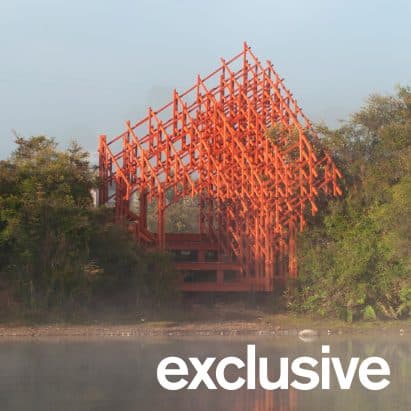
Dum-Dum Lab's Troya Pavilion Redefines Outdoor Education in Chile
Chilean architecture studio Dum-Dum Laboratorio de Arquitectura Avanzada, widely known as Dum-Dum Lab, has completed a striking lakeside pavilion in Chile that doubles as an environmental classroom. Named the Troya Pavilion, the structure is a thoughtful blend of architectural ingenuity, ecological sensitivity, and educational purpose. It stands as a compelling example of how contemporary design can serve both human communities and the natural environments they inhabit.
As outdoor and experiential learning gains renewed attention in educational circles worldwide, the Troya Pavilion offers a powerful case study in how architecture can be purposefully designed to connect students, educators, and visitors directly with nature. Rather than confining environmental education to four indoor walls, Dum-Dum Lab has created a space where the lake, the landscape, and the living ecosystem become the curriculum itself.
The Vision Behind the Troya Pavilion
The Troya Pavilion was conceived with a clear and meaningful mission: to provide a dedicated space where people can engage with their natural surroundings in a structured, educational context. Dum-Dum Lab designed the pavilion to sit at the edge of a lake in Chile, positioning it so that visitors are constantly in dialogue with the water, the vegetation, and the broader ecosystem around them.
The studio's approach reflects a growing movement in architecture that prioritizes ecological consciousness not just in the materials and methods of construction, but in the very function and purpose of built structures. By designing a space whose primary role is environmental education, Dum-Dum Lab makes a clear statement: architecture can and should serve as a catalyst for deeper human understanding of the natural world.
The pavilion's name, Troya, evokes a sense of strategic placement and purposeful enclosure — a structure that draws people in and immerses them in an experience larger than its physical footprint might suggest.
Architectural Design and Material Choices
Dum-Dum Lab's design philosophy centers on the idea that the pavilion should feel like a natural extension of its lakeside setting rather than an imposition upon it. The studio carefully considered the structural form, materiality, and spatial arrangement to ensure the building harmonizes with the surrounding landscape rather than competing with it.
The pavilion's open, permeable design allows natural light, air, and sound to flow freely through the space. This permeability is intentional — it ensures that visitors inside the pavilion are never fully separated from the sights, sounds, and sensations of the lake environment. Whether it is the ripple of water, the rustle of reeds, or the calls of native birds, the natural world is always present as an active participant in whatever educational or contemplative activity takes place within the structure.
Material selection was guided by a commitment to sustainability and contextual appropriateness. The studio favored locally sourced and natural materials that age gracefully in a lakeside environment, reducing both the carbon footprint of construction and the long-term maintenance burden on the site. This approach also ensures the pavilion will patina and settle into its landscape over time, becoming increasingly inseparable from its surroundings.
Environmental Education as Architectural Purpose
What makes the Troya Pavilion particularly significant is the directness with which its architectural program serves an educational mission. The structure was designed to host a range of activities including guided nature walks, ecological workshops, scientific observation sessions, and informal gatherings oriented around environmental themes. Its spatial organization supports both structured instruction and open-ended exploration.
Seating, sightlines, and circulation paths have all been designed with educational intent. Visitors are guided naturally toward views of the water, toward moments of shade and shelter, and toward vantage points that reveal the richness of the lakeside ecosystem. The pavilion does not merely accommodate environmental education — it actively facilitates it through the language of space and form.
This alignment between architectural design and pedagogical purpose is something architects and educators alike can draw inspiration from. In an era when environmental literacy is increasingly recognized as essential, spaces like the Troya Pavilion show how built environments can foster that literacy in direct, embodied, and memorable ways.
Dum-Dum Lab's Broader Approach to Architecture
The Troya Pavilion is consistent with Dum-Dum Laboratorio de Arquitectura Avanzada's broader practice, which consistently explores the intersection of architecture, environment, and community. The Santiago-based studio has built a reputation for projects that challenge conventional boundaries between interior and exterior, between the built and the natural, and between formal architectural programs and more fluid, experiential uses of space.
Their work tends to prioritize low-impact construction strategies, contextual sensitivity, and a genuine engagement with the communities and ecosystems that will be shaped by their buildings. The Troya Pavilion exemplifies all of these qualities, and in doing so, cements Dum-Dum Lab's standing as one of Latin America's most thoughtful and forward-looking architecture practices.
Why Lakeside Architecture Matters for Environmental Learning
Lakes and their surrounding ecosystems are among the most complex, biodiverse, and environmentally sensitive landscapes on the planet. They serve as critical habitats for wildlife, as freshwater resources for human communities, and as indicators of broader ecological health. Placing an educational pavilion directly at the edge of such an environment sends a powerful signal about the importance of observation, stewardship, and respect for these fragile systems.
- Lakeside environments offer rich opportunities for firsthand observation of water-based and riparian ecosystems, making them ideal settings for environmental education programs.
- Pavilion structures, when sensitively designed, can provide shelter and focus without isolating visitors from the natural processes happening around them.
- Architecture sited near water requires careful consideration of flooding, humidity, and ecological impact, demanding a higher standard of sustainable design thinking.
- Educational spaces positioned within natural landscapes have been shown to increase engagement, retention, and emotional connection to environmental topics among learners of all ages.
A Model for Future Educational Architecture
The Troya Pavilion by Dum-Dum Lab offers valuable lessons for architects, educators, and policymakers alike. It demonstrates that buildings designed with a clear ecological and educational mission can be architecturally compelling without being ostentatious, materially responsible without sacrificing quality, and functionally innovative without becoming impractical.
As communities around the world grapple with environmental challenges — from biodiversity loss and water scarcity to climate change and habitat degradation — the need for spaces that cultivate environmental awareness and ecological responsibility has never been greater. The Troya Pavilion points toward a future where architecture and education work hand in hand, and where the natural world is not just a backdrop for human activity but an active, essential teacher in its own right.
Dum-Dum Lab's lakeside environmental classroom in Chile is more than a beautiful pavilion. It is a manifesto in built form — a statement that thoughtful architecture can deepen our relationship with the planet we depend upon.