
Tornado Alley Is Moving — And Millions of Homeowners Don't Know It Yet
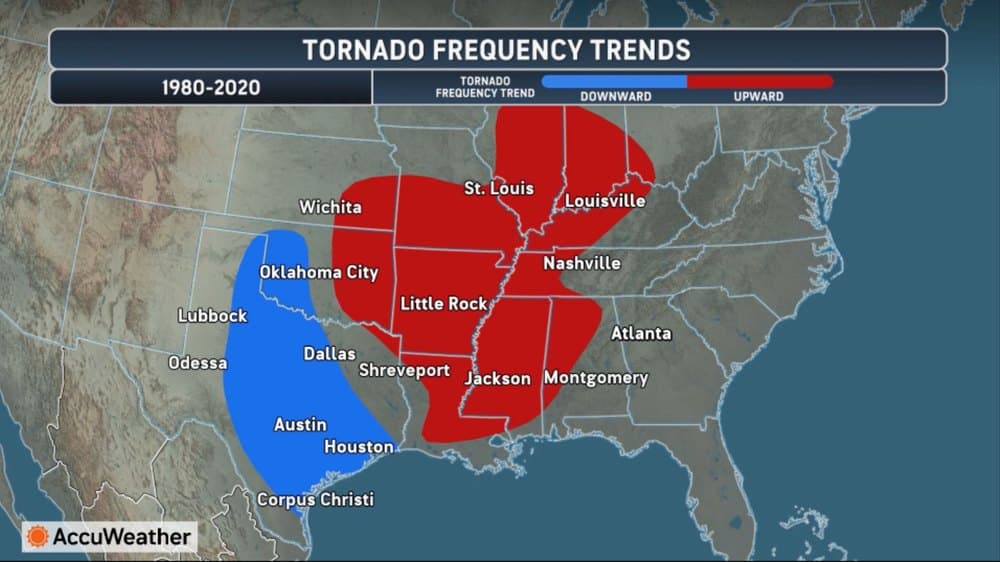
For generations, the name "Tornado Alley" has conjured images of flat plains, spinning funnels, and storm-chased skies over Kansas, Oklahoma, and Texas. That mental picture, while not entirely wrong, is becoming dangerously outdated. Over the past few decades, scientists and meteorologists have tracked a significant eastward migration of tornado activity — one that is quietly reshaping risk profiles for housing markets across the Southeast and Midwest. States like Arkansas, Alabama, Georgia, Mississippi, Tennessee, Ohio, and Iowa are now squarely in the line of fire, and many of the communities in those states are alarmingly underprepared.
For homeowners, buyers, real estate investors, and insurers, this shift isn't just a weather story — it's a financial and safety story that demands attention.
What Is Tornado Alley — and Where Is It Now?
Tornado Alley is the informal term used to describe a region in the central United States historically prone to severe tornado activity. According to the National Centers for Environmental Information (NOAA), this zone has traditionally encompassed the Great Plains, stretching from northern Texas up through Oklahoma, Kansas, Nebraska, and into South Dakota. The combination of warm, moist air from the Gulf of Mexico colliding with dry, cool air from the Rockies created ideal conditions for the powerful supercell thunderstorms that spawn tornadoes.
However, climate data collected over the past 30-plus years tells a different story. Tornado frequency in the traditional Great Plains corridor has been declining, while activity in the Southeast and parts of the Midwest has been increasing. Meteorologists now widely recognize a secondary zone — sometimes called "Dixie Alley" — that runs through Mississippi, Alabama, Arkansas, Tennessee, and Georgia. This region is not only seeing more tornadoes but experiencing more violent ones, often under conditions that make them especially deadly: nighttime strikes, complex terrain, and dense tree cover that reduces visibility and warning time.
Why Is Tornado Alley Shifting East?
Scientists attribute the eastward drift to several interacting factors, with climate change playing a prominent role. Rising sea surface temperatures in the Gulf of Mexico are increasing moisture availability further east, fueling stronger storm systems that can develop in environments outside the classic Great Plains setup. Changes in the jet stream — which acts as a steering mechanism for storm systems — are also being studied as a contributing factor.
Additionally, land-use changes, urban heat island effects, and shifts in seasonal temperature patterns appear to be influencing when and where the conditions for tornado formation are most favorable. The result is a broader geographic spread of tornado risk and a longer, less predictable tornado season that no longer peaks neatly in the spring months as it once did in the traditional corridor.
Which Housing Markets Face the Biggest Risks?
The housing markets most exposed to this shift share a troubling common thread: they were built, zoned, and insured under the assumption that devastating tornado risk was largely a Great Plains problem. That assumption is now a liability. Several specific states and their metropolitan areas stand out as particularly vulnerable.
- Arkansas and Mississippi sit at the heart of what researchers consider the most at-risk zone for violent, long-track tornadoes. Mobile homes and older wood-frame housing stock are disproportionately common in both states, offering minimal protection against even moderate tornado winds.
- Alabama and Tennessee have already experienced catastrophic tornado events — the 2011 Super Outbreak remains one of the deadliest tornado events in U.S. history, killing hundreds across both states. Yet housing construction standards and community storm shelter infrastructure have not kept pace with the elevated threat level.
- Georgia is seeing increasing tornado activity in areas where residents have little cultural memory of tornado risk, meaning preparedness levels are low and early warning systems are less deeply embedded in community behavior.
- Iowa and Ohio represent the northern edge of the expanding risk zone, where expanding suburban development is creating new exposure in areas that lack the storm shelter traditions common in Oklahoma or Kansas.
Why These Markets Are Unprepared
Preparedness gaps in these newly high-risk markets stem from several converging issues. First, building codes in much of the Southeast and Midwest do not require the same level of wind-resistant construction that might be mandated in states with longer histories of tornado exposure. Safe rooms and storm shelters, while common in Oklahoma subdivisions, remain rare in Tennessee or Georgia neighborhoods of comparable size and value.
Second, homeowners insurance markets in these regions are beginning to react to the elevated risk, but often after the fact. Premiums are rising, coverage is being restricted, and some insurers are quietly pulling back from high-risk zip codes — a dynamic that mirrors what has already played out in hurricane-prone coastal markets. Homebuyers in Arkansas or Mississippi may not fully appreciate that the insurance landscape for their new home is shifting beneath their feet at the same time tornado risk is increasing above their heads.
Third, community infrastructure — including tornado sirens, emergency management systems, and public storm shelters — is often underfunded and insufficient in smaller cities and rural areas across Dixie Alley. Unlike Oklahoma City or Wichita, which have decades of institutional knowledge and investment baked into their emergency response systems, cities like Tupelo, Mississippi or Clarksville, Tennessee are still building that capacity.
What Homeowners and Buyers Should Do Now
Whether you currently own a home in an at-risk market or are considering purchasing one, proactive steps can meaningfully reduce your exposure — both physically and financially.
- Research your specific address's risk level using tools from NOAA, FEMA, and private risk assessment platforms that now incorporate updated tornado frequency data rather than historical Tornado Alley assumptions.
- Review your homeowners insurance policy carefully, paying attention to wind damage deductibles and exclusions. In some southeastern markets, wind and hail coverage has been separated from standard policies, meaning additional riders are necessary for meaningful protection.
- Invest in a safe room or storm shelter if your home lacks one. FEMA offers resources and, in some cases, grant programs to help offset the cost for qualifying homeowners in high-risk areas.
- Understand your home's construction standards. Older homes, manufactured housing, and structures built before recent updates to building codes may carry significantly higher vulnerability to tornado-force winds.
- Build a warning response plan and ensure your household knows how to access real-time alerts through NOAA Weather Radio, the Wireless Emergency Alert system, and local emergency management apps.
The Bottom Line for Real Estate and the Housing Market
Tornado Alley's eastward shift is not a distant forecast — it is a measurable, ongoing trend with real consequences for property values, insurance affordability, and community resilience across the Southeast and Midwest. As more buyers, lenders, and insurers incorporate updated climate risk data into their decisions, housing markets in newly high-risk areas will face increasing pressure to adapt. The communities and homeowners who act now — strengthening structures, securing appropriate coverage, and investing in preparedness — will be far better positioned than those who wait for the next disaster to force the conversation.
Understanding where the risk is moving is the first step. Taking it seriously is the next.