
A Hidden Home in the Heart of South London
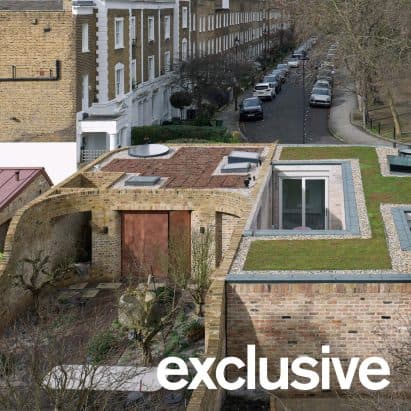
At first glance, the quiet Georgian square of Cleaver Square in Kennington, south London, appears unchanged — a dignified arrangement of listed townhouses surrounding a leafy communal garden. But behind one of its centuries-old brick walls lies something entirely unexpected: a brand-new single-storey home, designed by local architecture studio Inglis Badrashi Loddo and aptly named the Walled Courtyard house. This compact yet ambitious project is a masterclass in sensitive infill design, proving that thoughtful architecture can create generous, characterful living spaces even on the smallest of urban plots.
What Is the Walled Courtyard House?
The Walled Courtyard house is a single-storey residential property completed by London-based architecture practice Inglis Badrashi Loddo (IBL) on a 63-square-metre infill site in Kennington, one of south London's most historically rich neighbourhoods. The site originally formed part of the garden of a Grade II-listed Georgian townhouse on Cleaver Square — a designation that comes with strict planning and conservation requirements, demanding exceptional sensitivity from any architect who dares to build there.
Rather than fighting against the constraints of the site and its heritage context, IBL turned those constraints into the central concept of the design. The result is a home that is genuinely hidden from the street, enclosed by existing brick garden walls that preserve the historic character of the square while sheltering a quietly remarkable piece of contemporary architecture within.
Designing Within a Heritage Context
Working within a conservation area alongside a Grade II-listed building is one of the most challenging scenarios any architect can face in the United Kingdom. Planning authorities rightly scrutinise such projects closely, and the demand to respect the existing architectural fabric is non-negotiable. Inglis Badrashi Loddo approached this challenge not as a limitation but as a creative foundation.
By keeping the new structure single-storey and positioning it behind the existing garden walls, the practice ensured that the historic streetscape of Cleaver Square remained visually intact. The walls themselves — already a defining feature of the site — became load-bearing elements of the architectural narrative, enclosing the home and creating the private courtyard from which the project takes its name. This strategy of concealment is not merely pragmatic; it is deeply considered, allowing the new building to exist in respectful dialogue with the centuries of history surrounding it.
Making the Most of 63 Square Metres
Sixty-three square metres is not a generous footprint by any standard. In a city as densely built as London, however, it represents a genuine opportunity — and IBL seized it with both hands. Compact housing design demands a particular kind of spatial intelligence, one that prioritises quality over quantity, light over mere floor area, and the relationship between inside and outside over rigid room hierarchies.
The Walled Courtyard house achieves this through several key strategies:
- Courtyard living: The enclosed courtyard is not simply a garden — it functions as an outdoor room, extending the usable living area of the home beyond its internal footprint and flooding the interior with natural light.
- Single-storey layout: By spreading the accommodation horizontally rather than stacking it vertically, the design avoids the sense of compression that can afflict tightly planned multi-storey homes, instead creating a flowing, pavilion-like sequence of spaces.
- Material continuity: The use of brick — a material that ties the new structure directly to its historic surroundings — creates visual coherence between old and new, making the home feel rooted in its setting rather than dropped into it.
- Careful orientation: The positioning of windows and openings has been carefully considered to maximise daylight while maintaining the privacy appropriate to such an intimate urban site.
Inglis Badrashi Loddo: An Architecture Practice to Watch
Inglis Badrashi Loddo is a London-based architecture studio known for its thoughtful, site-specific approach to residential and cultural projects. The practice has steadily built a reputation for work that engages seriously with context, materiality, and the everyday experience of inhabiting space. The Walled Courtyard house is a particularly strong demonstration of their design philosophy — one that resists the urge to impose a bold architectural statement at the expense of its surroundings, and instead finds its confidence in restraint, precision, and a deep understanding of place.
This kind of approach is increasingly valued in London's complex urban environment, where so many potential building sites sit within conservation areas or adjacent to listed structures. Architects who can navigate those conditions creatively — finding design quality within strict parameters rather than despite them — are contributing something genuinely valuable to the city's architectural culture.
The Broader Significance of Infill Housing in London
The Walled Courtyard house is more than just a beautifully designed home. It represents an important argument about how London can grow. With housing demand consistently outstripping supply, and with large development sites increasingly scarce in inner London, infill projects like this one offer a compelling alternative: small, sensitively designed homes that make use of forgotten pockets of land without disrupting the character of established neighbourhoods.
The 63-square-metre site on Cleaver Square was, until recently, simply a garden — a pleasant enough amenity, but not delivering housing in one of the world's most undersupplied property markets. By transforming it into a carefully considered single-storey dwelling, Inglis Badrashi Loddo have demonstrated that even the smallest urban plots can accommodate a genuinely liveable home when approached with skill and imagination.
A New Model for Urban Living
The Walled Courtyard house invites us to reconsider what a home needs to be. It does not offer expansive square footage or dramatic views across the London skyline. What it offers instead is something arguably more valuable in a dense, noisy city: privacy, calm, a strong sense of enclosure, and a beautifully crafted relationship between inside and outside space. The walled courtyard at its heart is not an afterthought — it is the soul of the house, a protected outdoor sanctuary in the middle of south London.
As cities around the world grapple with housing shortages, climate pressures, and the challenge of building sensitively within historic environments, projects like this one point towards a productive way forward. Small need not mean compromised. Constrained need not mean uninspired. And hidden, it turns out, can be exactly the right way for a building to be bold.