
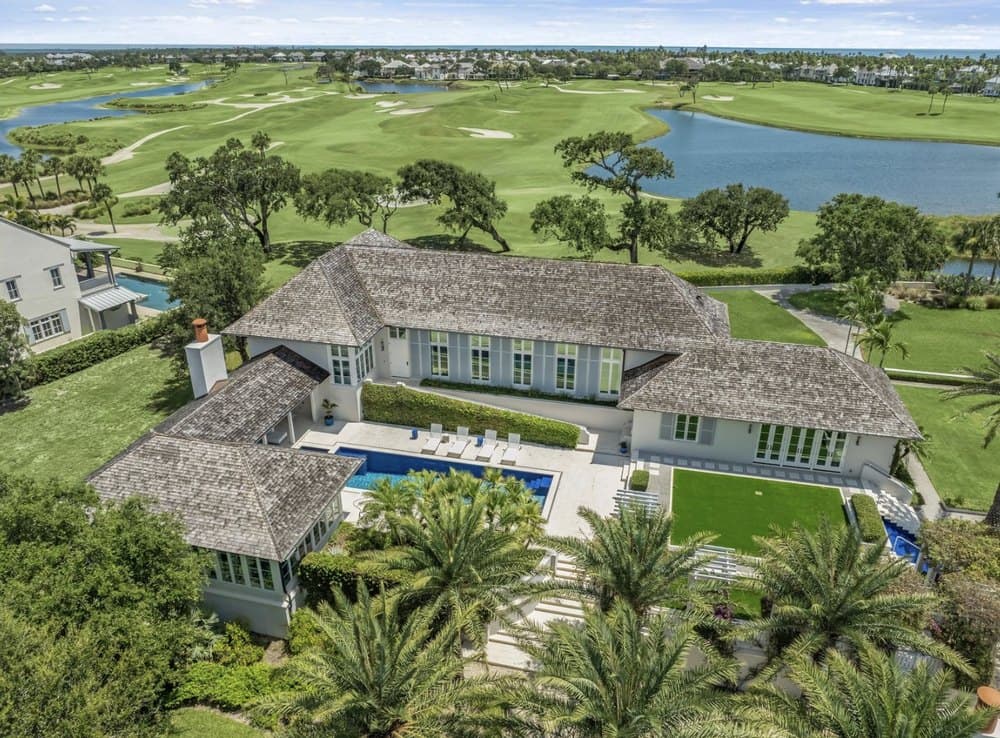
The Rise of the Golf Club Lifestyle in Luxury Real Estate
Golf has long been associated with wealth, prestige, and social networking. But something has shifted dramatically in recent years. It's no longer enough for the ultra-affluent to simply hold a membership at an exclusive club — they want to live there, wake up to manicured fairways outside their windows, and build their entire lifestyle around the amenities that only a world-class golf community can offer. This evolution has quietly transformed golf club real estate into one of the most coveted — and competitive — segments of the luxury property market.
According to the National Golf Foundation, there were approximately 3,200 golf facilities across the United States in 2024 that included a real estate component, whether as part of a planned residential community or a resort real estate complex. That number alone tells a compelling story. But what's even more striking is the premium buyers are willing to pay to call these communities home — and the cultural forces that are driving demand to new heights.
How the COVID-19 Pandemic Transformed the Golf Lifestyle
Industry experts widely agree that the COVID-19 pandemic was the true inflection point for the golf lifestyle real estate boom. As lockdowns reshaped daily life and urban living suddenly felt restrictive, the appeal of open green spaces took on an entirely new dimension. Golf, as an outdoor activity naturally conducive to social distancing, saw a massive surge in participation. Courses that were once the exclusive domain of seasoned players suddenly welcomed a wave of new enthusiasts eager to spend time outside safely.
But the appeal went well beyond the sport itself. Affluent buyers began reconsidering where and how they wanted to live. Spacious, resort-style communities that offered privacy, fresh air, and a curated lifestyle became extraordinarily attractive. The pandemic didn't just boost golf — it fundamentally redefined what buyers expect from a luxury residential community.
More Than Golf: The Allure of the All-Inclusive Community
What separates today's luxury golf communities from the private clubs of decades past is the sheer breadth of amenities on offer. Modern golf residential developments are essentially self-contained lifestyle ecosystems. While the championship-caliber courses remain a central draw, developers and community operators have invested heavily in creating environments that cater to every interest and age group.
- Sports and recreation: Beyond golf, residents enjoy access to tennis courts, pickleball facilities, resort-style swimming pools, fitness centers, and miles of hiking and biking trails — all within the gates of a single community.
- Dining and social programming: Upscale clubhouse restaurants, casual grille rooms, and chef-driven dining experiences keep residents entertained without leaving the property. Many communities also offer wine tastings, cooking classes, and curated lecture series featuring notable speakers.
- Wellness and spa facilities: Full-service spas, yoga studios, and personalized wellness programs have become standard expectations in the top tier of the market.
- Concierge services: Residents in premium golf communities often enjoy hotel-level concierge services, from private event planning to on-site property management.
This convergence of luxury amenities under one roof — or rather, one set of gates — has made golf communities remarkably sticky. Once residents experience this level of integrated living, it becomes very difficult to imagine returning to a conventional neighborhood.
The Premium Price of Living on the Fairway
Perhaps the most telling indicator of just how desirable golf community real estate has become is the significant price premium it commands. Buyers are willingly paying double-digit percentage premiums over comparable non-golf properties in the same region. This isn't simply a matter of paying for a nicer home — it's paying for access, exclusivity, and a built-in social network of like-minded, high-net-worth neighbors.
The social capital embedded in these communities is real and measurable. For many affluent buyers, the address itself carries weight in business and social circles. Membership in a prestigious golf club has always conveyed status, but living within one elevates that signal considerably. It signals not just wealth, but a specific taste for curated, resort-quality living — and a commitment to a lifestyle that revolves around leisure, wellness, and community.
Who Is Buying Into the Golf Lifestyle?
The buyer profile for luxury golf community real estate has evolved considerably. While retirees and semi-retirees remain a core demographic, developers are increasingly seeing younger, high-earning buyers — particularly remote workers and entrepreneurs whose location flexibility was unlocked by the pandemic — entering the market. For these buyers, the golf community isn't a retirement destination; it's a primary residence that delivers a quality of life they refuse to compromise on.
Second-home and investment buyers are also active in this space, drawn by the rental income potential of resort-affiliated properties and the long-term appreciation track record that well-managed golf communities have demonstrated.
What the Future Holds for Golf Community Real Estate
With participation in golf continuing to grow — particularly among younger demographics and women — the pipeline of potential buyers for golf community real estate shows no signs of slowing. Developers are responding by bringing new, thoughtfully designed communities to market in sought-after destinations across the Sun Belt, the Mountain West, and coastal regions.
Sustainability is also becoming a key differentiator, with leading communities investing in water-efficient course management, native landscaping, and eco-conscious construction practices that appeal to environmentally conscious luxury buyers.
For the foreseeable future, the luxury golf club community represents far more than a place to play a round. It is a lifestyle statement, a social institution, and increasingly, the most coveted address in American luxury real estate.